Two Vials, One Question: A Triage Standard for Duplicate Specimen Requests
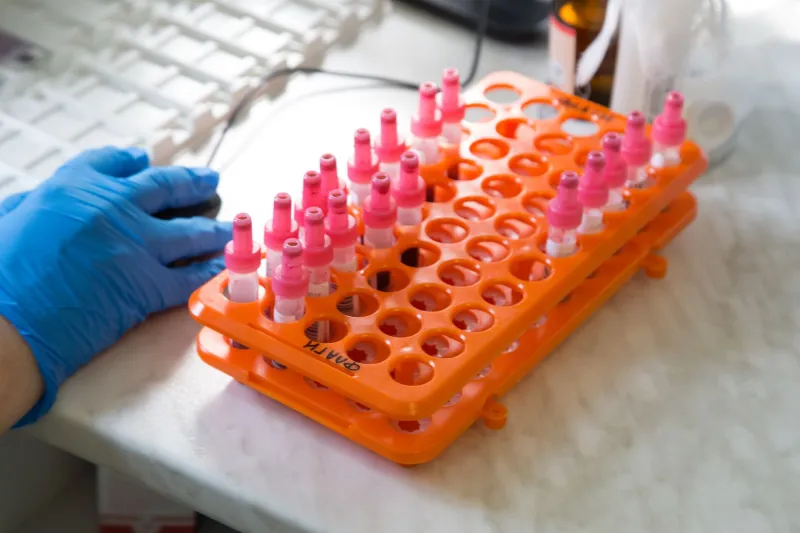
A specimen request is not simply a container with a form attached. It is a clinical question, a logistics event and a laboratory commitment. When the same question arrives twice, the laboratory must decide whether it is being asked again or merely asked badly. In UK microbiology and clinical laboratories, duplicate requests are rarely dramatic, but they are persistent: they occupy benches, consume reagents, generate reports and occasionally create a second answer that no one needed.
The problem is not the second sample
The obvious response is to treat every repeat as waste. That is too simple. A second blood culture may be a legitimate part of a sepsis pathway. A repeat sputum sample may follow an inadequate specimen. A timed series may require more than one collection. The difficulty lies in separating a true duplicate, where the same test is requested on the same patient episode without a clinical reason, from a legitimate repeat, where time, specimen quality or clinical change justifies another submission.
This distinction cannot be made by the laboratory alone, and it should not be made by the requesting ward alone. It requires a shared standard that is visible at the point of request and auditable after the event.
Where duplicates enter the system
Duplicate requests usually arise through ordinary pressure rather than deliberate duplication. A clinician may reorder a test because the first request is not visible on the ward system. A phlebotomist may collect an extra set because a request form was reprinted. A specimen may be re-labelled after a near-miss, creating a second barcode for the same collection. In some cases, two members of staff request the same test within minutes because communication at handover is incomplete.
The laboratory sees the consequence: two request records, two specimen numbers, one patient and often one clinical question. If the laboratory processes both without review, it may produce two results that differ slightly because of sampling time, specimen volume or analytical variation. The ward then faces an unnecessary interpretive task. In the worst case, a second result may prompt a change in antimicrobial therapy that was not clinically indicated.
System flags are necessary but not sufficient
Most laboratory information management systems can flag possible duplicates using patient identifiers, specimen type, test code and a defined time window. These rules are useful, but they must be designed with clinical input. A six-hour window may be appropriate for a routine urine culture, but it may be inappropriate for blood cultures in a patient with suspected endocarditis or for a timed series.
The flag should not automatically cancel a request. It should create a review point. The review should answer three questions: is this the same patient episode, is this the same clinical question, and is there a documented reason for a repeat? If the answer to the first two is yes and the third is no, the request is a strong candidate for duplicate status.
Manual workarounds and their limits
Many laboratories already manage duplicates through local workarounds. A senior biomedical scientist may recognise a familiar name. A reception team may telephone the ward before accessioning a second sample. A bench lead may hold a specimen pending clarification. These practices are valuable, but they are fragile. They depend on memory, availability and informal authority.
A workaround should be documented as a temporary control, not treated as the permanent system. The aim is to move from individual vigilance to a repeatable triage standard. That standard should include a named contact for ward queries, a defined holding period for suspected duplicates, and a clear record of the decision. If a specimen is held, the reason should be visible to the next person who handles it.
Ward and laboratory communication
The most effective duplicate control is a short, structured conversation. The laboratory should not ask simply whether the sample is a duplicate. It should ask whether the clinical question has changed. A ward nurse or clinician can usually answer that in a few seconds if the request is clear.
In return, the laboratory should explain what it needs. A request that says repeat culture without indicating why the first was inadequate is difficult to triage. A request that notes previous sample rejected due to delay in transit or persistent pyrexia despite therapy gives the laboratory a defensible basis for processing.
This communication should be recorded. A brief note in the request record is enough: duplicate query raised, ward confirmed repeat for clinical deterioration, or duplicate query raised, no clinical change, request cancelled. These notes become the audit trail and the teaching material for future improvement.
A short audit model
A practical audit can be completed without a large project. Start with a two-week sample of requests flagged as possible duplicates. For each, record the patient identifier, specimen type, test code, time between requests, whether a clinical reason was documented, the triage decision and the final outcome.
Then classify each case into one of three groups. First, true duplicate: same episode, same question, no documented reason. Second, legitimate repeat: same episode but a documented clinical or specimen-quality reason. Third, unresolved: insufficient information to decide. The proportion in each group is more useful than a single duplicate rate because it shows where the process is failing.
Follow up a subset of true duplicates to see whether a result was released and whether it changed clinical management. This is not always possible, but even a small review can reveal whether duplicate results are reaching the ward as unexplained second answers.
Making the standard stick
The final step is to agree what happens next. A duplicate request should not simply disappear. It should be cancelled with a reason, or held with a reason, or processed with a reason. The requesting area should be told which applies. Over time, the pattern of reasons becomes a quality indicator: repeated cancellations from one ward may indicate a request-system visibility problem, while repeated legitimate repeats may indicate a need to review the original collection instructions.
The laboratory cannot eliminate every duplicate request, and it should not try to. Its task is to make the distinction between duplication and repetition visible, consistent and defensible. Two vials may arrive with one question. The laboratory's job is to answer the question once, or to explain clearly why it is answering twice.