When the Pharmacy Becomes the Testing Site: A Validation Framework for Near-Patient Molecular Assays
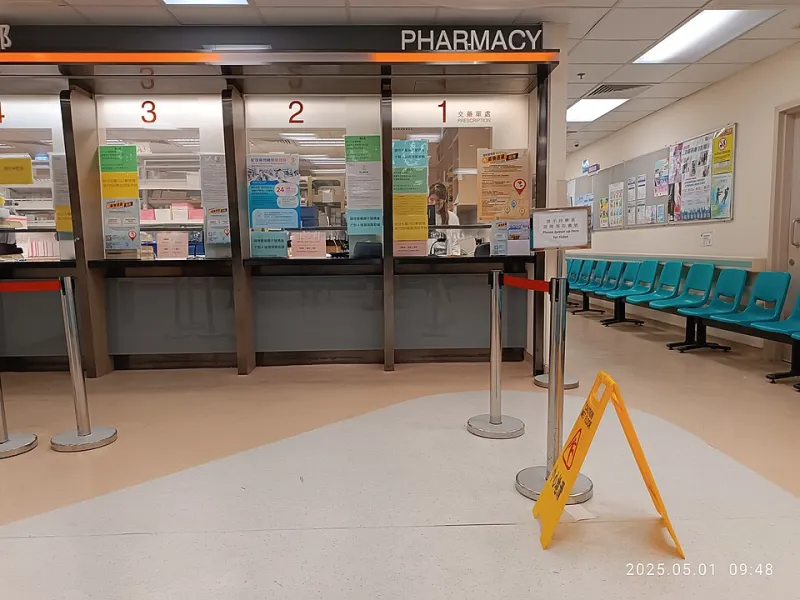
Photo: BEAISCHUNA mwoAAU, CC0, via Wikimedia Commons
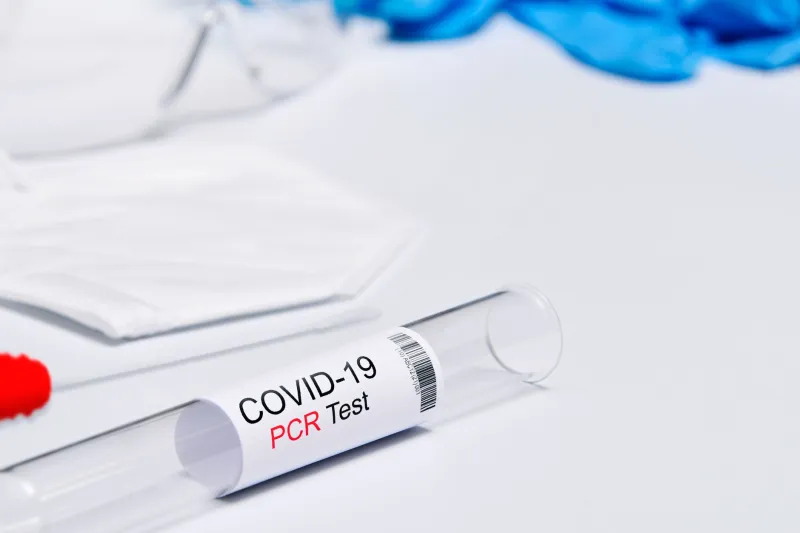
Community pharmacy is no longer only a place where prescriptions are dispensed. Across the UK, pharmacy teams are taking on a wider role in near-patient testing, including molecular assays for respiratory and other infections. A molecular platform on a retail counter can add convenience and speed, but it does not become a laboratory simply because it has been placed there. Validation is the process that demonstrates the whole testing system is fit for its claimed clinical purpose, not merely that the cartridge functions.
For UK laboratory teams asked to support, oversee or assure pharmacy-based molecular testing, the central question is not whether the platform is clever. It is whether the result can be trusted for the decision that will follow. That requires a documented view of the assay, the operator, the environment, the result report and the clinical pathway.
Define the claimed use before the platform is chosen
Validation should begin with the intended use, not the product brochure. Which patients will be tested? What specimen will be collected, by whom, and with what swab or collection device? Is the test intended to support diagnosis, triage, screening or surveillance? Will the result be used to start, stop or change treatment, or only to guide a conversation and referral?
A pharmacy service that tests asymptomatic people for reassurance is a different proposition from one that tests symptomatic patients and issues a result that affects antimicrobial prescribing. Both may be legitimate, but they require different evidence, different limitations and different escalation routes. The laboratory should insist that the claimed use is written down in plain terms before validation samples are run.
Analytical performance is necessary but not sufficient
Manufacturer data on analytical sensitivity and specificity provide a starting point, not a conclusion. The laboratory should review the limit of detection, inclusivity for circulating variants or strains, interference from common substances, cross-reactivity and specimen stability. Where the platform uses a proprietary cartridge, the laboratory still needs to understand what the result means at the clinical decision point.
Verification on site should use samples that resemble those seen in pharmacy practice, not only high-titre control material. That may include residual clinical specimens, contrived samples or external quality assessment material, subject to appropriate governance. The aim is to confirm that the assay performs as expected in the hands of the intended operators and in the intended setting. A platform that performs well in a central laboratory may behave differently at a retail counter with intermittent use, ambient temperature variation and staff who test only occasionally.
Contamination control starts with the room
Molecular testing is sensitive, and that sensitivity is not selective. Amplicon contamination, carry-over and environmental contamination can all produce false-positive signals if workflow and cleaning are not controlled. Pharmacies are busy public spaces with retail traffic, shared surfaces and limited separation between testing and other activities. The risk assessment should be specific to the premises.
A practical layout should provide a dedicated testing area, unidirectional workflow where possible, separate waste routes and equipment that is not shared with dispensing or other tasks. Where cartridge-based platforms reduce open handling, that is helpful, but it does not remove the need for cleaning schedules, gloves, spill procedures and negative controls. Environmental monitoring may be proportionate rather than extensive, but the decision should be documented. The laboratory should also confirm how invalid and unexpected results are handled, because these are often the first sign that contamination or operator error is present.
Operator competence and human factors
A near-patient molecular result is produced by a system that includes the person pressing the buttons. Training should cover specimen collection, cartridge handling, platform operation, result interpretation, invalid runs, documentation and escalation. Competence should be assessed initially and reassessed at defined intervals, with records retained. It is not enough to train one enthusiastic member of staff and assume the whole pharmacy team is covered.
Human factors matter. Interruptions, workload peaks, poor lighting, unclear instructions and ambiguity about who is responsible for acting on a result can all affect quality. Validation should include the intended operators, not only laboratory scientists, and should test the workflow at realistic pace. If the platform requires a result to be interpreted by a pharmacist, the handover between operator and interpreter should be explicit.
Results, reporting and the clinical interface
A result report should state what was tested, the specimen type, the platform used, the result and its limitations. Where a result is preliminary or requires confirmation, that should be clear. The report should also indicate the action expected, whether that is referral, treatment, isolation advice or no further action. A bare positive or negative label without context is rarely sufficient for safe patient care.
Laboratory oversight should extend to the audit trail. Can the service retrieve who tested, when, with which lot, and what was reported? Are results entered into the patient record and retained in line with information governance requirements? Is there a route for amended reports and incident reporting? External quality assessment should be part of the annual cycle, even if the service is small. Where point-of-care testing falls within a laboratory's accreditation scope, the laboratory should be able to demonstrate that oversight through documents, records and review meetings.
Governance, accreditation and change control
Community pharmacy premises are regulated by the General Pharmaceutical Council, and molecular devices must meet UK regulatory requirements, including UKCA marking where applicable. These are necessary foundations, but they do not replace local validation. The laboratory should agree a written oversight arrangement covering responsibilities, escalation, quality control, audit and review.
Change control deserves particular attention. Cartridge updates, software revisions, new specimen collection devices and changes to the clinical pathway can all alter performance or interpretation. The laboratory should be notified before changes go live and should decide whether revalidation is required. Contracts with suppliers should support this, including access to technical documentation and timely communication of field safety notices.
A pre-go-live checklist for laboratory oversight
Before a pharmacy molecular service goes live, the laboratory team should be able to confirm the following:
- A written intended-use statement and clinical pathway are agreed.
- Analytical performance has been reviewed and local verification completed.
- The premises layout and contamination controls have been risk-assessed.
- Cleaning, waste and spill procedures are documented and understood.
- Initial and ongoing operator competence records are in place.
- Quality control and external quality assessment arrangements are defined.
- Result reporting, limitations and escalation routes are specified.
- Information governance and record retention have been addressed.
- Incident reporting and change control processes are agreed.
- A scheduled audit and review cycle is in place.
None of these steps is unusual in laboratory practice. What is unusual is applying them outside the laboratory, where the testing site is also a shop, the operator may not be a scientist and the patient may expect an immediate answer. That is precisely why the validation framework needs to be explicit. Pharmacy molecular testing can add value when it is integrated with laboratory oversight, but it should not be treated as a shortcut around it. The counter can be a testing site. It cannot be an excuse to skip the evidence.