Speed Is a Claim, Not a Result: A Checklist for Rapid AST Adoption in UK Laboratories
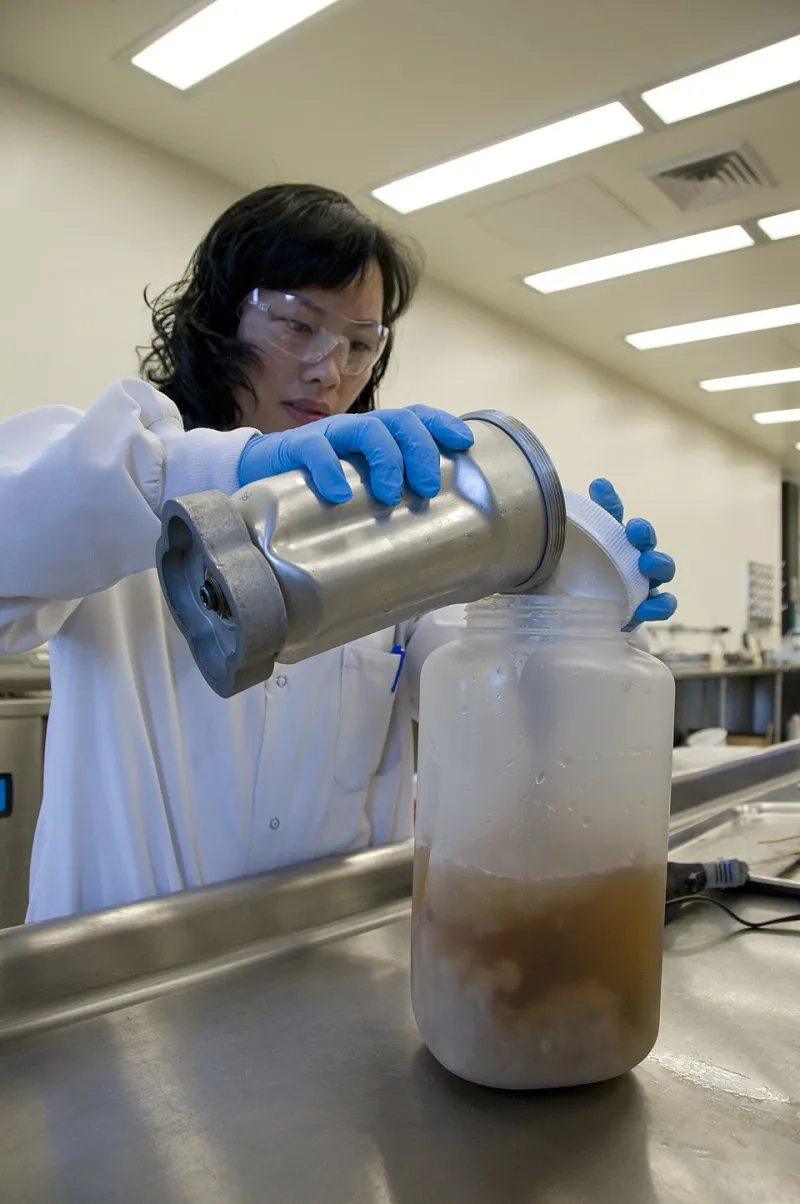
Photo: clinical microbiologist loading blood culture bottles into automated susceptibility testing instrument, via img.yumpu.com
There is a particular sentence that appears in almost every rapid antimicrobial susceptibility testing (AST) pitch: 'results up to 24 hours earlier'. It is usually true, narrowly. It is also, on its own, one of the least useful claims in diagnostic microbiology, because the clinical value of an earlier result depends entirely on what the laboratory does with the extra hours it has been given.
This is an argument for adoption — with conditions. Rapid AST belongs in the modern UK laboratory. What does not belong there is a purchase justified by turnaround time alone.
The pitch, fairly stated
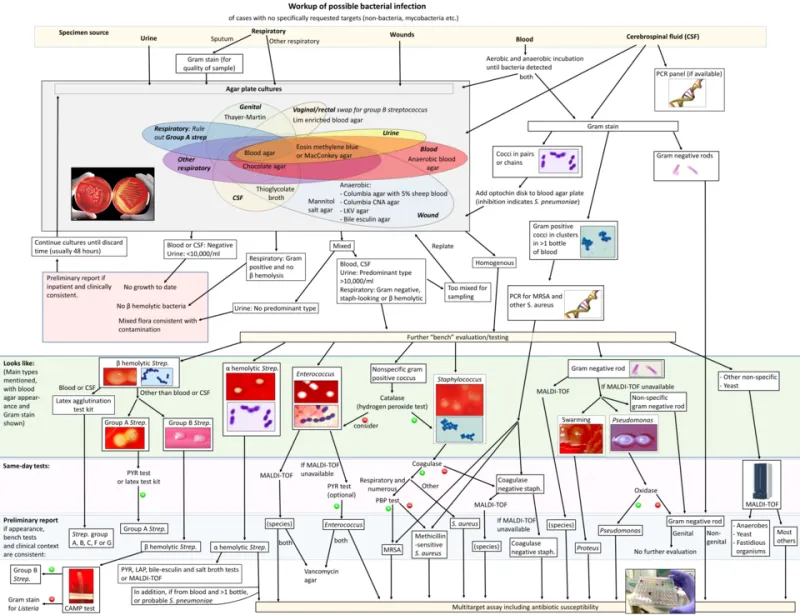
For bloodstream infections, conventional phenotypic AST runs from a positive blood culture through subculture to a result, with the clock often landing somewhere between 18 and 48 hours after the bottle flags. Rapid phenotypic systems that work directly from positive blood culture, and molecular panels that detect resistance determinants within hours, compress that. In a septic patient, the difference between a targeted narrow agent on Tuesday morning and Wednesday morning is not a rounding error.
So the technology is not the problem. The problem is the gap between a fast result and a fast decision, and that gap is almost never technological.
Verification is not paperwork
UK laboratories accredited to ISO 15189:2022 are expected to verify that a method performs as intended in their own hands, with their own organisms, their own media and their own staff. Rapid AST platforms are frequently validated by manufacturers against reference methods and curated collections. That is a starting point, not an answer for your laboratory.
A defensible verification will deliberately include the awkward organisms: the carbapenemase producers, the borderline AmpC expressions, the coagulase-negative staphylococci that will inevitably turn up, the mucoid isolates, the mixed cultures that a direct-from-bottle method cannot resolve and quietly calls something else. Include the discrepant results and describe what happens next, because the most important question is not how often the method agrees but what the laboratory does when it does not.
Genotype is a hypothesis; phenotype is a result
Molecular panels are attractive because they are fast and because they are easy to explain. They are also a different kind of information. A detected resistance gene is strong evidence that a drug will fail, but its absence is not a promise that the organism is susceptible: expression, permeability, efflux and resistance mechanisms outside the panel's repertoire all live in the space between a negative result and a clinical certainty.
The honest position, and the one that should be written into the reporting pathway, is that a genotypic result guides therapy while a phenotypic result confirms it. Laboratories that blur that line produce reports that clinicians over-read, and over-read reports produce exactly the kind of broad-spectrum comfort prescribing that stewardship programmes exist to undo.
Breakpoints are a moving target, and your software may not have noticed
The European Committee on Antimicrobial Susceptibility Testing revises breakpoints and adds or removes agents with some regularity, and UK laboratories follow that guidance. Every rapid AST adoption should therefore include a documented breakpoint version, an agreed process for updating it, and a named owner. It is unglamorous and it is where accreditation assessments increasingly look.
There is a related trap in comparing your new instrument's output to your existing method's output. If both are read against an out-of-date breakpoint table, agreement will look excellent and mean very little.
Local epidemiology is an input, not a backdrop
The value of a fast result is contingent on the local antibiogram. In a trust where carbapenem resistance in Enterobacterales remains rare, a rapid rule-out may change little for most patients; in a trust with endemicity, the same result may be the difference between meropenem and something newer. Laboratories buying rapid AST should be able to show, in numbers, which of their patients the result will change and how.
This is also the right moment to say something unpopular: not every laboratory needs the fastest available platform. A district general hospital with a modest blood culture volume and a well-run conventional workflow may gain more from extended laboratory hours than from a new instrument, and should be free to say so without being accused of resisting innovation.
The report is the intervention
The single most common failure in rapid AST adoption is a fast result delivered in a slow format. A result that arrives at 06:00 but is authorised at 09:30, transmitted as a cumulative report that the ward does not open, and phrased identically to the conventional result, has bought nothing.
Design the report as deliberately as you design the workflow. Say explicitly what is fast, what is provisional, and what will follow. Name the organism and the agent in plain terms. State the interpretive standard. Provide a route for the clinician to call the laboratory, with a number that is answered.
Stewardship has to work at two in the morning
Antimicrobial stewardship in the UK has a well-developed grammar: Start Smart then Focus, review at 48 hours, intravenous-to-oral switch, documented indication. Rapid AST only earns its keep if the out-of-hours and early-morning pathways can act on it. That means the on-call pharmacist knows the platform exists, the sepsis pathway allows a result to trigger de-escalation without a new consultant review, and the microbiology registrar is not the only person in the building who can interpret the output.
Run the exercise in reverse: take three real results from the new platform and trace them forward through the night. If none of them would have changed a prescription before 09:00, the turnaround time saving is real but the clinical saving is not yet.
A ten-point checklist for 2026
- Define the clinical question the platform answers, in one sentence, before speaking to any supplier.
- Estimate the size of the eligible population from your own data, not the supplier's.
- Verify against local organisms, including the awkward ones, and publish the discrepancies internally.
- Fix the breakpoint version and the update process in writing.
- Decide and document how genotypic and phenotypic results are reported alongside one another.
- Agree the reporting format with clinical users before go-live, not after.
- Confirm out-of-hours authorisation and a callable contact route.
- Brief the ward pharmacists, the sepsis leads and the on-call rota, in person.
- Set three outcome measures — time to optimal therapy, days of broad-spectrum therapy, and one safety measure — and review at six months.
- Decide in advance what you will stop doing to absorb the new workload.
The verdict
Rapid AST is worth pursuing, and the argument for it is stronger in 2026 than it was five years ago, as the UK's antimicrobial resistance action plan continues to push on both stewardship and diagnostics. But the technology is the easy part of the purchase. The hard part is the twelve months after installation, when a laboratory must hold together validation data, breakpoint governance, reporting language, local epidemiology and a ward that can respond before breakfast.
Buy the speed. Then spend the same effort making it mean something.