Blue Light, Hard Questions: Commissioning UV-C Room Disinfection in UK Laboratories
UV-C disinfection is often sold to UK laboratories as a final, almost automatic layer of assurance. The hardware arrives with a dose figure, a lamp-hour counter and a warning sign; the commissioning file is sometimes thinner. That is a problem. In a laboratory, a disinfection claim is not a property of the lamp alone. It is a claim about a room, a surface, a cleaning state and a cycle that can be repeated and audited. Before a UV-C device is allowed to count towards infection control, laboratory managers should be able to show what it reaches, what it does not, and how that boundary is maintained.
A device is not a process
UV-C at around 254 nm inactivates microorganisms by damaging nucleic acid. Efficacy depends on delivered dose, which is irradiance multiplied by exposure time, and on the geometry of the space. Distance reduces irradiance sharply; angle matters; lamp output falls with age; humidity and temperature can shift performance; soil and shadowing can protect organisms. A mobile unit placed in the corner of a preparation room may look convincing, but it cannot illuminate the underside of a bench, the inside of a closed cabinet, or the space behind a centrifuge. Those are not minor exceptions. They define the limits of the claim.
Start with the room survey, not the sales sheet
Commissioning should begin with a placement survey. The survey should record room dimensions, reflective and absorptive surfaces, fixed equipment, high-touch points, drainage, cable routes and likely shadow zones. A simple grid of measured irradiance at working height and at surface level is more useful than a single central reading. The output should be a placement map with each lamp position, the surfaces it is intended to treat, and a list of surfaces declared out of scope. That map becomes the reference for training, cleaning schedules and future change control. If a bench is moved or a new incubator is installed, the map should be reviewed before the next cycle is credited.
Dose must be demonstrated in situ
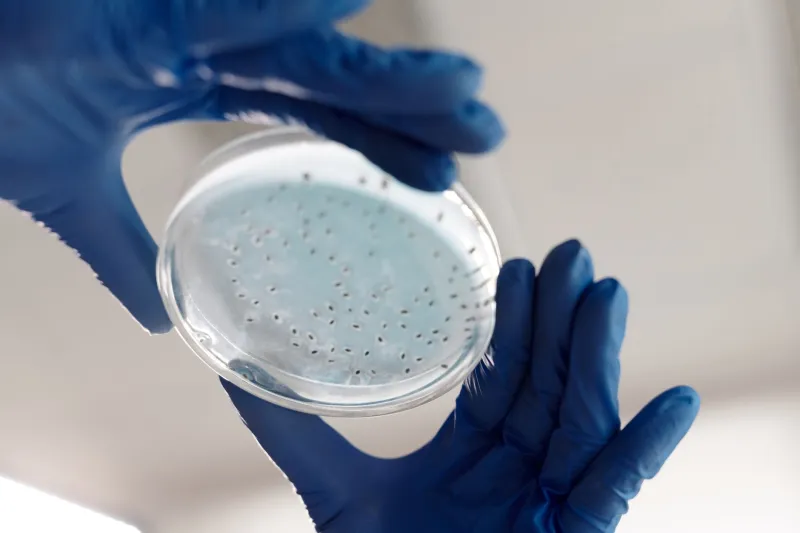
Manufacturers quote UV-C dose in millijoules per square centimetre. That figure is a starting point, not a site result. Laboratories should verify delivered dose with a calibrated radiometer or appropriate dosimeter at defined locations, including worst-case positions. Lamp ageing, sleeve fouling and reflector condition should be included in the measurement plan. Biological indicators, typically spores of Bacillus atrophaeus on carriers, can provide a complementary check at selected sites, but they should not be asked to carry the whole validation alone. A carrier result shows that conditions at that point allowed inactivation; it does not prove that every shadowed surface in the room received the same treatment. Physical dosimetry and biological verification should be read together.
Revalidation should be triggered by lamp replacement, room modification, changes to the placement map or a deviation in routine monitoring. A fixed annual date is less important than a risk-based schedule that reflects use and change.
Cleanliness is part of the dose
UV-C is a surface treatment, and surfaces must be clean to receive it. Organic material, biofilm and dried residues can shield microorganisms and absorb UV-C. The operating procedure should therefore state that manual cleaning and disinfection are completed and verified before a UV-C cycle is claimed. Visible soil is a stop condition. UV-C should not be presented as a spill response, a substitute for autoclaving, or a way to avoid cleaning difficult equipment. In practical terms, the sequence is clean, inspect, place, cycle, record. If the first step is skipped, the later steps are theatre.
Safety interlocks are part of validation
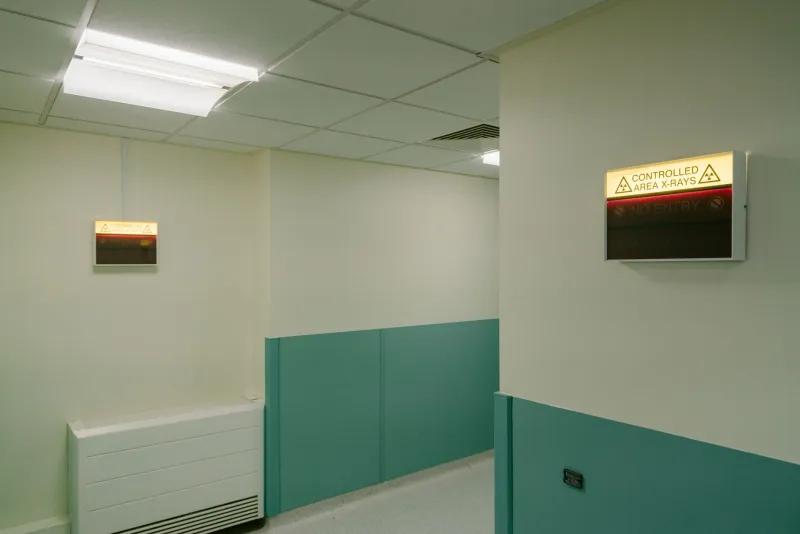
UV-C is hazardous to eyes and skin. In UK laboratories, the device should be covered by a risk assessment under the Management of Health and Safety at Work Regulations 1999 and by the manufacturer's instructions. Door interlocks, occupancy sensors, warning lights, signage and remote start controls should be tested at commissioning and at defined intervals. The cycle should not be possible with the room occupied. Emergency overrides should be controlled, logged and reviewed. Some UV-C sources can generate ozone; ventilation and material compatibility should be checked. Plastics, acrylics, seals and labels may degrade after repeated exposure, so the survey should include a materials check. Safety is not an accessory to the disinfection claim; it is a condition of using the device at all.
The record that makes a cycle auditable
A UV-C cycle should produce a record that an auditor, estates team or infection prevention colleague can follow. The record should include the room identifier, device identifier, lamp hours, pre-clean confirmation, placement map version, measured dose or dosimeter result, biological indicator result where used, operator, date and time, interlock test status and any deviation. The standard operating procedure should define who may authorise a cycle, what counts as a pass, what happens after a fail, and how the device is quarantined if performance is uncertain. In a UKAS-accredited laboratory, these records should fit the existing quality management system rather than sit in a separate folder. Change control should capture lamp changes, repairs, software updates and room alterations.
What UV-C cannot claim
UV-C cannot disinfect inside closed equipment, under debris, within liquids or beyond opaque barriers. It cannot replace manual cleaning. It cannot guarantee a room-wide log reduction from a label dose. It cannot be used in occupied spaces. A defensible claim is narrower: supplemental reduction of viable microorganisms on exposed, pre-cleaned surfaces within the validated placement map and cycle conditions. That wording may be less impressive than a marketing brochure, but it is the wording that survives an audit and an incident review.
A commissioning model for UK laboratories
Four stages are enough to start. First, define the intended use and exclusions in writing. Second, survey the room and produce a placement map with measured irradiance. Third, verify dose and, where appropriate, biological performance at worst-case points. Fourth, document the cycle, train operators, test interlocks and set a revalidation schedule. The output is not a certificate to frame on the wall. It is a controlled process with boundaries that staff can explain. The question for UK laboratory managers is not whether the unit has a UV-C lamp. It is whether the laboratory can prove what that lamp does in this room, on these surfaces, after this cleaning step, with these safety controls. Until then, the lamp in the corner is hardware, not infection control.