The Silent Thaw: A Governance-Led Playbook for Ultracold Storage Failure
At 03:12 on a winter morning, a stand-alone ultracold freezer in a UK microbiology laboratory begins to drift above its set point. The alarm reaches an on-call phone, but the person who answers is not a facilities engineer. They are a biomedical scientist who now has to decide, in the dark, whether to move samples, call estates, wake a quality lead or wait for the compressor to recover. That decision is the subject of this article.
Ultracold storage failure is often framed as a plant-room problem: a compressor, a refrigerant leak, a door left ajar. In practice, it is a laboratory governance event. The contents may include clinical diagnostic material, reference strains, nucleic acid extracts, cell lines or research samples governed by human tissue or good-manufacturing-practice requirements. A thaw can therefore become an infection-control issue, a research-integrity issue and a regulatory notification issue at the same time. The response should be planned accordingly.
The alarm is a trigger, not a conclusion
A remote alarm proves only that a temperature threshold has been crossed. It does not establish whether the door was open for two minutes or the refrigeration circuit has failed for two hours. The first task is to establish the facts without adding to the damage: check the current temperature and the alarm history, inspect the door seal and any recent access log, and confirm whether the monitoring probe is reading correctly. A second, independent thermometer should be used where available. Staff should not open the freezer repeatedly to investigate; each opening exchanges cold air for warm, moist room air and can accelerate the thaw.
Escalation should be pre-agreed and role-based. The laboratory manager or shift lead owns the incident log. Estates or the contracted maintenance provider owns the equipment diagnosis. The quality lead decides whether the event affects accredited activities under ISO 15189 or GxP arrangements. The biological safety officer advises on spill, containment and waste where primary containers may have failed. A nominated reference facility contact should be available for samples that cannot be safely held on site. In a small laboratory, one person may hold several roles, but the roles should still be named in the plan rather than improvised at 03:30.
First hour: contain, record, do not rescue everything
If the freezer cannot be restored quickly, the priority is to stabilise the immediate environment. Confirm that the room ventilation is adequate before bringing dry ice into a confined space; carbon dioxide accumulation is a real risk in small storage rooms and basements. Put on appropriate gloves and eye protection, and inspect for frost, condensation and damaged tubes before moving anything. Leaking primary containers should be segregated and handled as contaminated waste under local rules. The incident log should record times, temperatures, actions and staff names as they happen, not reconstructed the next morning.
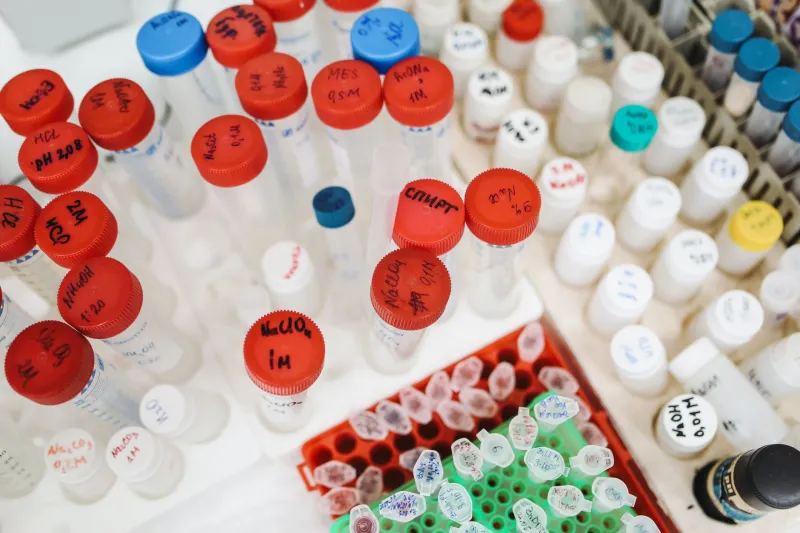
Not all samples can or should be rescued. A useful triage matrix ranks material by two axes: regulatory or clinical importance, and whether viability or integrity can realistically be preserved. Clinical diagnostic samples with pending results may take precedence over archived research material. Unique reference strains may justify transfer to a partner laboratory, while duplicate extracts can be destroyed without compromising a programme. The decision should be documented with a rationale, because a later audit will ask not only what was saved but why other items were not.
Dry ice is a controlled supply chain
Emergency dry ice logistics are frequently the weakest part of the plan. Dry ice is not a casual purchase: it is UN1845, it sublimes, and it must be transported and stored with appropriate ventilation and training. A laboratory should know in advance which supplier can deliver outside normal hours, how much it can supply at short notice, and whether the receiving area can safely hold it. A small inventory of insulated transport boxes, absorbent material and temperature loggers should be kept for this purpose, not borrowed from another department during the incident.
Where samples are moved to a reference facility, the transfer should follow the same principles as any other biological shipment: appropriate triple packaging, absorbent material, accurate documentation and a named receiving contact. The receiving laboratory should be told what happened and what condition the samples are in. A transfer under emergency conditions is not an excuse to bypass tracking; if anything, the audit trail matters more.
Recovery is not closure
Once the freezer is repaired or the samples are relocated, the incident is not over. The laboratory should confirm the actual temperature excursion, not the assumed one, using logger data where available. Viability or integrity checks should be proportionate to the material: culture recovery for strains, cell viability and mycoplasma checks for cell lines, and analytical review for reagents or extracts. Clinical samples may need to be recollected rather than rescued, and that decision should involve the requesting clinician and the quality lead.
The post-incident review should ask whether the alarm was heard, whether the escalation route worked, whether the triage decisions were defensible and whether the dry-ice supply chain performed as expected. It should also examine the less obvious controls: spare capacity, duplicate storage, maintenance records and the frequency of door openings. A freezer failure is rarely caused by one factor alone.
A drill worth repeating
A short, annual tabletop exercise is more useful than a lengthy plan that no one has read. Simulate a failure at an inconvenient time, name the samples, test the contact list and ask who authorises destruction or transfer. Invite estates and, where relevant, the reference facility. The aim is not to produce a perfect performance but to expose the assumptions that would otherwise be discovered at three in the morning.
Ultracold storage is a shared dependency, not a background utility. Treating its failure as an infection-control and research-governance event gives laboratories a clearer route through the first hour, the first day and the audit that follows.