Pressure, Proof and the Paper Trail: Rethinking Autoclave Validation in UK Laboratories
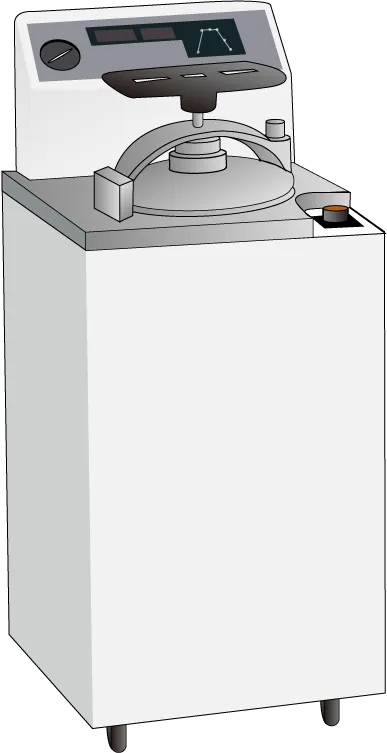
Photo: Database Center for Life Science (DBCLS), CC BY 3.0, via Wikimedia Commons
Autoclave validation has a habit of arriving as a calendar event: a date in the quality manager's diary, a service visit, a folder of printouts, a signature. That framing is comfortable, but it is not good enough. In a UK laboratory in 2026, validation is not simply evidence that a steam steriliser worked on the day it was tested. It is evidence that the laboratory understands its loads, controls its cycles and can defend its release decisions when an audit team asks difficult questions.
That shift in emphasis matters because autoclaves sit at the junction of patient safety, research integrity and infection control. A failed cycle is not only an equipment problem. It is a potential breach in the chain that keeps contaminated material from becoming someone else's exposure. Validation should therefore be approached as a live control point, not a retrospective filing task.
Start with the load, not the machine
Many validation failures begin with a mismatch between what was tested and what is actually sterilised. A machine may pass a challenge load while routine loads remain poorly characterised. UK laboratories should begin by defining load families: the routine combinations of instruments, glassware, media, liquids, discard and porous items that the autoclave is expected to process. The validation programme should then test representative and worst-case loads within those families.
This is not a reason to create an elaborate taxonomy that no one uses. It is a reason to document load maps clearly, review them when practice changes and ensure that staff know which loads have been validated. A new container, a denser pack, a different discard bag or a changed cycle can all alter steam penetration. The checklist question is simple: does the validated load still resemble the real load?
Biological indicators: the closest thing to a verdict
For steam sterilisation, biological indicators remain a central part of validation. Spores of Geobacillus stearothermophilus are used because they are more resistant than most contaminants of concern. Placement matters as much as the indicator itself. A biological indicator in an easy-to-reach chamber position tells you less than one placed in the hardest-to-sterilise part of a representative load.
Laboratories should confirm that indicator handling, incubation, positive controls and reading times follow the manufacturer's instructions and local policy. The result should be interpreted alongside physical parameters and chemical indicators, not in isolation. A pass is reassuring; a fail demands investigation, not a repeat until the paperwork looks better.
Chemical indicators and cycle records
Chemical indicators are useful, but they are often overinterpreted. External and internal indicators provide evidence of exposure to the sterilisation process. They do not prove sterility. Their value lies in routine monitoring, load release and detecting obvious process deviations.
Cycle records should be reviewed with the same discipline. Automatic printouts and electronic logs are only useful if someone checks them, identifies excursions and records the action taken. A chart with no signature and no review is not assurance. It is an untested assumption.
The documentation traps that audits find
Audit findings rarely emerge from exotic science. They emerge from ordinary gaps: a load released without authorisation, a maintenance record that cannot be matched to the machine, an indicator result filed without the associated cycle number, a training record that predates a change in SOP. The common thread is traceability.
The validation pack should allow an auditor to follow a logical path from the equipment and its intended use, through installation and operational checks, to performance qualification and routine monitoring. Records should be version-controlled, legible and linked to the relevant SOP. Change control matters too. If a chamber load changes, a cycle parameter is altered or a new consumable is introduced, the validation impact should be considered and documented.
Competency is part of the cycle
Staff competency is often treated as a training folder issue, but it is part of the sterilisation process itself. The person who loads the autoclave, selects the cycle, reviews the record and releases the load is making a technical judgement. New starters, bank staff and researchers who use laboratory autoclaves infrequently all need more than a brief induction.
A practical competency matrix should identify who may operate which autoclave, who may release loads, who may review validation records and who escalates failures. Refresher training should be triggered by SOP changes, incidents and observed practice, not only by an annual date.
A practical 2026 checklist
- Define and document load families, including worst-case loads.
- Confirm that physical parameters are measured in representative positions.
- Place biological indicators in the most challenging part of the load.
- Use chemical indicators as process monitors, not sterility proof.
- Review every cycle record and record the review.
- Link maintenance, validation and repair records to the specific machine.
- Maintain a current competency matrix and authorisation list.
- Apply change control to loads, cycles, equipment and consumables.
- Investigate failures and near-misses with a clear corrective action trail.
- Sample the validation pack as an auditor would, before the auditor does.
None of this replaces professional judgement or the relevant standards and guidance, including HTM 01-01 and ISO 17665 where applicable. It does, however, move validation away from the annual ritual and towards the everyday question that matters: can this laboratory show that its sterilisation process is controlled, monitored and understood?
In 2026, that is the standard UK laboratories should be ready to meet. Validation is not the folder. It is the confidence behind the release.